Category: World

President Trump’s Wall Executive is Opposed by Mexico and Many Who Work in Protecting the Border and May Cause a Trade War

58887bb6c361888b558b45cd

Photo Credit: RT

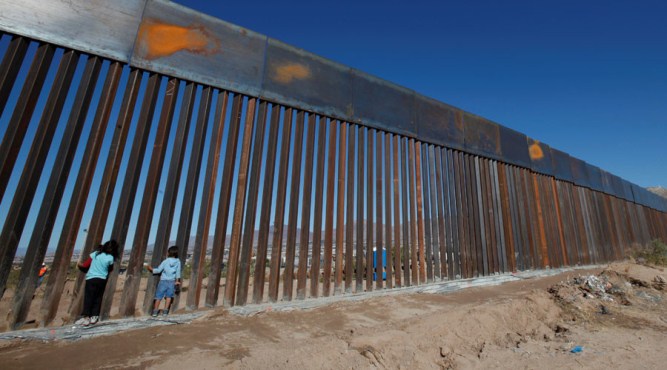
After President Donald Trump signed an executive order to begin construction on a wall along the US-Mexico border, former president of Mexico, Vicente Fox was adamant that Mexico would not compensate the US for this wall.  During an interview on CNN, Fox repeated his previous comments to CNN’s reporter, Anderson Cooper that “Mexico will not pay for that f**king wall, Americans should pay for it.”  Sean Spicer, Trump’s press secretary stated that the Trump team will make Mexico will pay for the wall through massive tariffs on Mexican goods being exported to the US.  Former-President Fox fired back stating that If the US were to put tariffs on Mexican goods, Mexico would respond by putting higher tariffs on American exports to Mexico.  American exports to Mexico total more than 240 billion dollars.  A trade war with the US’ fourth largest trade partner would do immense damage to the economies of both countries.

Many people involved in border security have said that a wall will be a waste of resources and time.  Many agents with US Customs and Border Patrol have stated that a wall will not do much to stop illicit traffic in narcotics or people.  The majority of undocumented migrants enter legally but overstay visas.  Those who do sneak into the border normally work as seasonal laborers in agriculture during planting or harvesting times for crops and then return home to Mexico.  Other agents simply state that a wall would be easy to cross with ladders or tunnels.   A fence already exists for much of the border and has helped in many areas but failed to make any difference in others.  Building a wall along the border would also require the seizure of hundreds of private properties in South Texas due to most of the land being privately owned and used for agriculture.  Much of the mountainous terrain in West Texas, New Mexico, and Arizona make building any sort of infrastructure impossible.  For President Trump to build his planned wall, all of these hurdles must be dealt with.

President-Elect Trump Finally Acknowledges that Russia Hacked the US Election

President-Elect Trump released a statement stating that he did, in fact, believe that Russia meddled in the American election process.  Reince Priebus, one of Trump’s closest aides and nominee for White House Chief of Staff, told Fox News that ” [Trump] accepts the fact that this particular case was entities in Russia, so that’s not the issue.”

In December of 2016, the CIA released a report confirming suspicions that Russia was actively trying to support Trump in the election by hacking organizations connected to the Clinton campaign.  In response, some electors called for a briefing on Russian interference in the election before the electoral college voted.

The alleged involvement of Russia in the US election involves hacking Democratic party data and releasing degrading information about Hillary Clinton through wiki-leaks.  Russia also allegedly planted fake news which hurt Clinton’s public image.  There are also reports of Russia planting trolls on the internet to attempt to influence people to vote for Trump.

Until recently, President-elect Trump denied any involvement from Russia in the election.  He dismissed these charges as an attempt to de-legitimize his election victory.  Trump has been criticized for his praising of Russia and Russian president, Vladimir Putin.  Meanwhile, intelligence officials repeatedly stated that the allegations of Russian involvement were backed by sufficient evidence.  President Obama imposed new sanctions on Russia and stated that counter cyber attacks were possible.  Several senators from both parties have come out in support of tougher action against Russian cyber-attacks.

During the confirmation hearings of Gen. John Kelly for Homeland Security, Mike Pompeo for CIA director, Rex Tillerson for Secretary of State and James Mattis for Defense secretary, the issue of cyber security and Russian cyber attacks were discussed in great detail.  All the cabinet appointees have pledged to step up efforts to defend the US against future cyber warfare.


The Flaws of “America First”

By Hari S. (guest contributor)

When a president is elected and our nation’s greatest adversaries celebrate, you know there is a problem. When a president is elected and Americans are grieving, you know there is a problem. When a president is elected and women feel demeaned and not empowered, you know there is a problem. When that president is Donald Trump, the problem becomes even clearer.

Trump, however, has done a masterful job of covering up his many flaws, compensating for his dubious tax methods by appealing to the wealthy and promising them lower taxes, but also brought into play the white, working-class, Rust-Belt element of America by promising to bring back their jobs and scrap globalization for an “America First” strategy.

“America First” may sound appealing, but it has some key flaws- take the Iran nuclear negotiation, for instance. With a country as hostile as Iran, can we afford to put America first and make relations frostier than they already are? If we choose to do this, our deepest priorities- preventing nuclear proliferation, advancing human rights, and creating unity in the region, will pay the price.

His appeals to various classes are equally problematic- by lowering taxes “big-league” (35%), how can a potential Trump administration take care of all the services and improvements they have promised to the urban poor, who are, in his words, “living in hell”?  By bringing jobs back to America, labor costs will increase, forcing companies to cut workers and leading to the same undesirable employment situation from where we started.

Moreover, the implications of Trump’s presidency on our reputation across the world are the most detrimental. America was founded on the premise that “all men are created equal” and that anyone has a chance to succeed. Why, then, do we not apply that to the rest of the world by welcoming Muslim and Latino immigrants? Why wouldn’t we give developing economies a chance to grow instead to support the greater good instead of America first, because we only truly succeed when the world does.

Knowing all that we do about what America stands for and how much was at stake on November 8th, it should be truly disappointing to all Americans, regardless of race, economic status, or religion that the people of this country were disillusioned into electing a man who promises much, but has proved himself to achieve little.

The Worsening Situation in South Sudan

South Sudan is the newest country in the world.  It broke away from the nation of Sudan in 2011 after years of civil war.  South Sudan is home to over 60 different ethnic groups and the majority of these groups either follow traditional religions or Christianity and speak local tribal languages.  This is in contrast to the north of Sudan where the majority of people speak Arabic and are Muslim.

When Sudan gained its independence from joint rule by the UK and Egypt, a group of military elites from the north took power.  The south’s natural resources were exploited with little benefit to the impoverished people living there and almost all gain from the mining of resources such as gold and the production of oil went to the powerful and well-connected elites from the north.  Meanwhile,  many of the regions in the south of Sudan suffered from immense poverty and famine.  In 1983, civil war broke out with many tribes from the south uniting against the government in the north of Sudan.  The Sudanese government is accused of attempting to engage in genocide and ethnic cleansing of regions in the south of Sudan and government-backed militias have attacked several non-Arab villages and tribes such as the Dinka and Nuer, the two largest groups in modern South Sudan.

In 2005, after years of war and famine, a ceasefire was finally reached between the government of Sudan and rebels from the south.  They agreed that southern regions of Sudan would be able to autonomously govern themselves.  The agreement also stated that the autonomous regions of southern Sudan could hold a referendum for independence at any time.

In 2011, a referendum on independence was held and almost 99% of voters voted for independence.  South Sudan became an independent nation but problems occurred almost immediately.  The many ethnic groups and tribes in South Sudan were all united while fighting against the Sudanese government to the north, however, tension between different factions began almost immediately after independence.  In order to try to limit these conflicts between tribes, a government was established with the president, Salva Kiir belonging to the largest ethnic group, the Dinka and the vice president, Riek Machar being from the second largest group, the Nuer.

In 2013, vice president Machar attempted to stage a coup d’etat to overthrow president Kiir.  Immediately afterward, Kiir expelled many members of the government who were part of Machar’s party.    South Sudan’s government under president Kiir alleges that Nuer soldiers loyal to vice-president Machar raided businesses owned by Dinka people in the capital city, Juba.   Most of the people who were dismissed from the government were from the Nuer tribe.  President Kiir filled most of the vacant positions with members of his own Dinka tribe.  Soon, former vice-president Machar fled South Sudan and called for president Kiir to resign.

Soon after this, majority Nuer militias clashed with the majority Dinka militia and the South Sudanese army.  Both government troops and rebels loyal to Riek Machar have been accused of attacking civilian villages where they have killed and raped people and looted property including cattle.  Ceasefire negotiations between different factions are ongoing but several agreements have broken down.  The United Nations has send peacekeeping forces to maintain order in the capital and to protect the refugee camps which are hosting massive numbers of people displaced by the fighting.  Amid the chaos, the already dirt-poor nation of South Sudan is once again facing famine due to and is extremely vulnerable to drought conditions making food shortages worse.  Almost all schools in South Sudan have shut down and the majority of people do not have access to medical attention.  This has exacerbated the already worsening disease epidemics such as malaria and cholera.

Today, the government of South Sudan reached out to rebel groups in an effort to re-convene peace talks amid increasing violence.


The Controversy Over the Israeli Settlements Resolution in the United Nations

This week, the US refused to use its veto power in the UN Security Council to block a resolution that condemned the construction of Israeli settlements in occupied Palestinian territory.  Under President Obama, the US has held a policy against Israeli settlements in the West Bank, however, the US had vetoed every resolution relating to the Israeli-Palestinian conflict in the UN Security Council until now.  The settlements Israel has built inside Palestinian territory are considered illegal by most of the international community.  Most countries are also vehemently opposed to the Israeli militaries actions in Palestinian territory which they allege amounts to a violation of the Palestinian people’s rights and a military occupation.  Most countries do recognize Israel but also recognize a Palestinian state.

Most nations maintain that the best solution to the Israeli-Palestinian dispute is a two-state solution, one where an Israeli state exists side by side with an independent Palestinian state.  Many say that Israeli settlement communities in occupied territory make the establishment of an autonomous Palestinian state impossible, thus hindering the peace process.  Supporters of Israeli settlements and military activity in the Palestinian territories claim that the land belongs to Israel and that the military presence in the Palestinian territories of the West Bank and Gaza are essential to Israeli security nad that settlements are built on land legally obtained from Palestinians, something most Palestinians deny.

After the UN vote passed the resolution banning Israeli settlements in the West Bank,  Israeli Prime Minister Benjamin Netanyahu called the resolution “shameful”.  He stated that he was ready to begin working with President-Elect Trump and was done working with President Obama.  Netanyahu also stated that Israel would not abide by the terms of the UN resolution.  Trump stated that the vote was “anti-Israel” and “an impediment to peace”.   Some US senators went even further in condemning the resolution.  Senator Lyndsey Graham stated that the US should pull out of the UN.

While Israeli leaders and conservative American policymakers stated disapproval for the UN resolution, Palestinian leaders had a very different reaction.  Palestinian Authority president, Mahmoud Abbas stated that this resolution “laid the groundwork” for the upcoming peace talks in Paris, a last ditch effort by President Obama and several European leaders to progress towards a peaceful solution to the Israeli-Palestinian Conflict.

With the incoming administration in the US, the future of American involvement in the Israeli-Palestinian Peace process is in question.  Will our stance stay similar to as it is now?  Or will the US’s involvement change?

Aleppo Update

After years of some of the worst fighting in the Syrian Civil War, the battle for Aleppo seems to be over.  On December 22, the last rebel fighters left the city.  Since then, some residents who fled the city have returned.

Throughout the months of November and December, as fighting intensified and casualties increased, several short-term ceasefires were reached.  None of these lasted for more than a few days, one being as short as two hours.  Most of these ceasefires were negotiated by Russia, a supporter of the Syrian regime and Turkey, a supporter of many rebel groups, opposed to the government.  Towards the end of the battle, as regime forces who were supported by Russian airstrikes and Iranian-backed militia closed in on rebel holdouts in East Aleppo, the carnage steadily increased as winter set in and supplies of food and other essentials ran out while the city was bombed relentlessly by Syrian regime and Russian planes.  Scenes of children killed or injured by the fighting flooded the internet.

Russian and Turkish officials tried to enforce more ceasefires towards the end of the fighting in order to allow civilians and surrendering rebels to escape from the city amid mounting international pressure.  While many civilians were able to exit Aleppo, there were allegations of rebel groups and Iranian militias abusing refugees.

On 22 December, the battle of Aleppo finally ended with all neighborhoods of the city under regime control.  This is a major blow to moderate rebel groups not only militarily but also diplomatically as those who did not surrender, fled to the city of Idlib.  Idlib is controlled by rebel groups that include affiliates of Al Qa’ida.


The Crisis in Aleppo Explained

With all the coverage of events in the US, I thought it would be beneficial to cover some international events.


Background on the Battle of Aleppo

As the Syrian civil war drags into its sixth year, the most devastating battleground is the city of Aleppo.  Aleppo used to be the largest city in Syria, an ancient center of commerce and trade. During the civil war, Aleppo has been all but destroyed by bombs and shelling.

During the civil war, the city has been used as a base by rebel groups fighting the Syrian government.  Syrian regime forces have responded brutally, often bombing civilian areas and blocking food, medicines, and other necessities from reaching the besieged areas of the city.  As of summer of 2016, half of Aleppo was controlled by the Syrian regime and half by a number of different rebel groups including some moderate groups supported by countries in the region such as Turkey and several Arab states Saudi Arabia and Jordan as well as extremist groups aligned with Al Qaeda and ISIS.

The Syrian regime is made up mostly of followers of the Shia sect of Islam although most Syrians and most people in Aleppo follow the Sunni sect.  The regime is thus backed by Shia countries and organizations including Iran and the Iranian-backed armed group, Hezbollah.  The Regime is also supported by Russia which is bombing rebel targets in Syria and proving support with equipment and special forces to the Syrian government.


The Situation Worsens

As regime forces closed in on the city of Aleppo, the number of civilian dead and wounded has steadily risen.  Regime forces have not allowed essentially supplies such as food to enter the city.  As casualties rose from airstrikes by Russian and Syrian regime planes and from artillery shelling, medical supplies were not allowed to be sent into Aleppo and the regime and its supporters have been accused of even bombing hospitals.

World Leaders’ Reaction to Trump

Donald Trump will be the next president of the United States of America.  A person who leaders around the world have called a racist, demagogue, and downright dangerous will command the world’s strongest country.  The entire world reacted at first with emotions of shock and fear but soon leaders started to congratulate President-elect Donald Trump.  Many stated that they are ready to work with the incoming president or talked about different international relations goals.

European leaders including German chancellor Angela Merkel and French President Francois Hollande called Trump and promised to work with him, however, Hollande did say that the world was entering an uncertain period.

Russian President,Vladimir Putin was the first foreign leader to congratulate Trump and has said he is excited to  work with him.  Putin has supported Trump since early on in the election.

Canadian Prime Minister, Justin Trudeau has said that he is ready to work closely with President Trump.

Iranian President, Hassan Rouhani has said that hopes Trump will respect the Iran Nuclear Agreement.

Israeli Prime Minister, Netanyahu has congratulated Trump and said he is a true friend to Israel.

Palestinian Authority President, Mahmud Abbas’ spokesperson said that he expected the US policy on the Israeli-Palestinian conflict not to change and hoped to continue negotiations.

Hopefully, Donald Trump will help foster peace and continued strengthening of relations across the world.  Some of his statements may have been controversial but Trump has recently been trying to reach out to world leaders and has already spoken to many officials around the world.