Author: Rohin

The New American Stance on the Israeli-Palestinian Conflict

By Rohin G.                   February 16, 2017
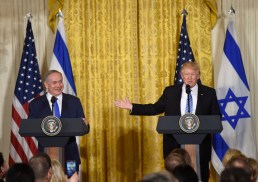
US-ISRAEL-NETANYAHU-TRUMP-DIPLOMACY

US President Trump and Israeli Prime Minister Netanyahu during a joint press conference.  

Photo Credit: Time

On February 15, President Donald Trump met with Israeli Prime Minister, Benjamin Netanyahu.  Many have seen an obvious shift in the rhetoric by the Trump administration, moving away from the Obama administration’s criticism of Israel and towards a more unconditional support of Israel regardless of Israeli actions.  Many advocates for a two-state solution and greater rights for Palestinians were and still are nervous about the new administration’s stances on Israeli-Palestinian issues.  One proposition from the administration was to move the US embassy in Israel from Tel Aviv to Jerusalem, a city hotly contested by Israelis and Palestinians.

Another controversial topic is that of Israeli settlements in the Palestinian territories of the West Bank.  For decades, the United States has attempted to pressure Israel to cease appropriation of Palestinian lands for the construction of Jewish communities.    Although the US has been against settlement activity, it has never supported measures against any Israeli action in the United Nations until the very end of the Obama administration.  Many Israeli actions have drawn harsher reactions from the international community.  Early this year, the United Nations passed a resolution banning all settlement activity by Israel in the West Bank with all members of the UN Security Council except the US voting yes. (see my previous article for more information: https://youthnewsjournal.com/2016/12/28/the-controversy-over-the-israeli-settlements-resolution-in-the-united-nations/  ).  The Obama administration chose not to veto the resolution, instead abstaining and allowing it to pass.  President Trump, as well as many American politicians from both parties, condemned the resolution stating that it was “anti-Israel” and adding that the only solutions to issues in the Israeli-Palestinian conflict are those reached through direct negotiations between Israelis and Palestinians.

Recent statements by the Trump administration present mixed signals about the new US stance on the Israeli-Palestinian conflict.  Although President Trump has pledged to move the US embassy from Tel Aviv to Jerusalem, Trump has not shown any signs of following through with that action thus far.  On the issue of settlements in the West Bank, President Trump has stuck to the US policy against Israeli settlement activity in the West Bank stating that settlements are “counterproductive for peace”.  President Trump, however, did break from longstanding US policy quite drastically when in a press conference with Israeli Prime Minister, Benjamin Netanyahu, he stated that he was fine with either a one-state or a two-state solution.  President Trump said that he still believed that the two-state option was easier to achieve but that he would support any solution which was agreed upon by both Israel and the Palestinians.  This radical shift in American policy away from mandating a two-state solution begs the question; what will the American role in Middle East peace be under the Trump administration?

What Trump Administration Officials have said About the Israeli-Palestinian Conflict

We can get a rough idea of the new administration’s stance based on what officials on the Trump team have said.

Most foreign policy conducted by the Trump administration as in any administration will likely be done by the secretary of state, who currently is Rex Tillerson.  Tillerson had not made many comments about the Israeli-Palestinian conflict before being nominated for secretary of state.  During his confirmation hearing, he stated that the US should give more support to Israel and condemned the recent UN resolution on settlements.  Tillerson did say that he supports restarting peace talks and also supports a two-state solution.

Any work in the United Nations will be done by UN Ambassador, Nikki Haley.  Haley has promised greater support for Israeli actions and to veto actions regarding the Israeli-Palestinian conflict in the UN stating that direct negotiations are the only way to reach a lasting solution.  She has spoken against Israeli settlement activity during her confirmation hearing.

The closest person to many issues in the region will be US ambassador to Israel, David Freidman if he is confirmed by the senate.  In the past, Freidman has made controversial comments about the Israeli-Palestinian conflict including his statement that a progressive Jewish organization called J Street was similar to Jews who collaborated with Nazis, and another statement where he openly endorsed Israeli settlements.  In his confirmation hearing, Freidman committed to facilitating direct negotiation between Israelis and Palestinians.

Although it is impossible to know what will happen with the ever-changing situation in the Middle East, the administration’s statements provide some basis for understanding.

If the Trump administration looks to people with more extreme viewpoints such as the nominee for ambassador to Israel, David Freidman, The US would likely take a stance of staunch support for Israeli actions regardless of what the actions are or the international opinion on them.  This could manifest itself as, for example, if Israel decides to engage in a massive expansion of settlements or a formal annexation of Palestinian lands, the US defends these actions and increases support for the Israeli state even though the Israeli actions would draw strong condemnation from the vast majority of the international community.  A less extreme example of this approach of staunch support for controversial Israeli policies is that of moving the US embassy in Israel to Jerusalem.  A key American ally in the region, Jordan, where many US forces are based, has called a possible move of the embassy to Jerusalem a “red line”.  Regardless of this statement, President Trump still says that he is considering moving the US embassy to Jerusalem.

A more likely approach by the new administration towards the Israeli-Palestinian conflict is that of more support for Israeli actions but a continued support for the peace process.  This is the approach which most of the President’s closest officials including secretary Tillerson and UN ambassador pick Nikki Haley have advocated for.  This policy would likely mean more military aid to Israel, less condemnation of Israeli actions, and a resistance to efforts in international organizations such as the United Nations to pass resolutions regarding Middle East peace.  However, this moderate approach would include constant encouragement to both Israelis and Palestinians to continue peace talks and would also include soft statements against Israel settlement activity.  This approach is already being taken by the administration in statements by President Trump endorsing continued negotiations between Israelis and Palestinians and requesting Israel cease construction of settlements in the West Bank.  This approach is almost exactly the same as the Bush administration’s policy towards Israeli-Palestinian issues.

Both approaches that could be taken by the Trump administration are far more unconditional in their support for Israel regardless of provocative actions than the approach taken by the Obama or Clinton administrations.  Both Presidents Obama and Clinton were staunch supporters of Israel but also often condemned Israeli actions including settlement expansions and restrictions on Palestinian people’s personal freedoms.
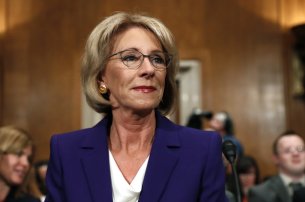
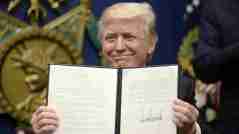


Education Secretary Betsy DeVos; What Might Happen

ap_17017806021690_slide-94eaaab44768d8a2a47a1488bbed932c7fa5935e-s900-c85

Photo Credit: NPR

On Tuesday of this week, Betsy DeVos was confirmed as secretary of education by the United States Senate.  The vote was extremely close with 50 senators, all republicans voting yes, and 50 senators, all democrats, and two republicans voting to block DeVos’ confirmation.  Vice President, Mike Pence broke the tie with an obvious vote for confirming DeVos as education secretary.  The two republicans who defected were Susan Collins (R-Maine) and Lisa Murkowski (R-Alaska).  Betsy DeVos is a billionaire who has made massive contributions to the Republican Party and has also been an ardent advocate for “school choice” policies.

DeVos has received criticism for her stances on issues and her lack of knowledge and experience on several education issues.  This lack of knowledge was evident when in her confirmation hearing, DeVos repeatedly admitted her not knowing about laws important to her position.  Betsy DeVos has never attended public school or university nor has she ever taken out a student loan.  In addition to this, none of the DeVos family has ever relied on government sponsored education.  DeVos infamously dodged a question on whether or not she would defund public schools.  In addition to that, DeVos seemed to make up statistics that were not true, at one time even stating that student debt has risen by “980%”, something that is not true.   When asked about how she would reduce student debt, DeVos refused to give detailed answers to several questions.  DeVos also took criticism when in response to a question from Senator Murphy (D-CT) regarding whether or not firearms should be permitted in schools, she stated that the issue should be left up to states, citing that a rural school in Wyoming needs guns to protect against “potential grizzlies” referring to the fact that the school actually needed a fence to protect from bears.  In fact, that school does not have any guns because there is no need for them.

Betsy DeVos is an ardent supporter of “school choice policies” including vouchers that can be used for school tuition fees. Voucher programs divert government funding away from public schools and into sending low-income children to private, for-profit schools.  DeVos also supports charter schools and voucher programs that include religious schools.  Proponents of vouchers state that they allow parents to make decisions about their children’s education.  They cite that having many private school options allows market forces to increase the number of students in the most preferred schools.  However, there are many ways that many Americans could by harmed by vouchers and other “school choice” programs.  The money given to families in order to help them afford private school tuition is money that is saved by cutting funding from public schools.  In addition, the voucher check that a low-income family receives is often less than the full cost of the private or charter school in their locality.  This leaves many families with a choice between an underfunded public school with few resources or a private school which they cannot afford (not a very good choice).  Most school voucher programs also subsidize religious schools, something that is constitutionally dubious.  In DeVos’ home state of Michigan where voucher programs were implemented, largely due to lobbying by the DeVos family, many issues brought up by “school choice” programs came to light.  Currently, many of the public schools in the Detroit, Michigan area are infamously underfunded, understaffed and in need of repair.  Many of the harshest opponents to Betsy DeVos’ confirmation were teachers.  In fact, most of the immense number of phone calls made to senators came from citizens mobilized by teachers’ unions.

Another concern that many people have about DeVos’ leadership in the department of education is that of protecting the rights of minority students, especially LGBTQ students and the teaching of religion in schools.  Although she has donated to religious organizations that oppose laws against discrimination against gay students, DeVos pledged to protect all students when asked about the issues in her hearing.  DeVos’ stance on religious curriculum is more complicated.  She has advocated for teaching creationism over evolution in public schools in the past.  When asked about her stance on the issue of teaching evolution, DeVos gave an answer which was extremely vague, stating that she “supported science”.  When pressed further about her opinions, DeVos refused to go into further detail.

Another tense issue is that of special education for students with mental disabilities.  When asked about whether or not she would support programs to help disabled students protected under the Individuals with Disabilities Education Act or IDEA by Senator Tim Kaine (D-VA), DeVos responded that the issue was best left up to states.  After being pressed by senators about her stance on the issue, DeVos doubled down, saying that she would enforce all laws passed by congress and supported special education and school choice for students with mental illnesses.  However, voucher programs have often resulted in special needs students losing access to programs that help them.

In addition to her vague but controversial stances on issues, Betsy DeVos may have conflicts of interest or ethics problems.  She allegedly has gained from investments in student debt and also allegedly plagiarized part of her written testimony to the Senate.

With all the controversy surrounding Betsy DeVos, many teachers, students, parents, and concerned citizens are wondering how much she can change the education department.  The main thing that she can do immediately is reducing enforcement of discrimination laws, something she has pledged not to do.  Instituting voucher programs would require congressional approval.  Although Republicans hold a majority, many rural areas depend on strong public schools.  Several Republicans from rural, midwestern states have constituents from these areas.  With many congresspeople and senators up for re-election in 2018, we can be hopeful that a federal voucher program is unlikely to happen.

President Trump’s Immigration Bans: Unlawful and Immoral


gettyimages-632867460_wide-69018116d3ca4c3126c1a235c32b1e850bcf4a2c-s1100-c15

jfk7a


On Friday, January 27, President Donald Trump signed an executive order banning all citizens from seven majority-Muslim nations, Syria, Iraq, Sudan, Iran, Somalia, and Yemen and suspending all admission of any refugees from entering the United States for six months and banning all asylum seekers from Syria entering the US until further notice.  The order was written hastily.  In fact, the Department of Homeland Security was never consulted nor was the Department of Justice.  Immediately after the ban was instituted, chaos and confusion ensued at airports where officials did not know whether or not the ban applied to US green-card holders and people with dual citizenship in one of the affected countries and a different country.

Citizens of countries affected by the executive order already must go through a rigorous vetting process in order to get a visa to allow them to enter the United States.  The visa process already takes between four and six months for the countries mentioned in the order, Sudan, Syria, Yemen, Iraq, Iran, Somalia, and Libya.  The application process for people who attempt to enter as refugees is even longer, taking at least 18 months and possibly taking up to two years of rigorous questioning by multiple government agencies in a foreign refugee camp.  In addition to this, not a single person from any of the countries implicated in Trump’s executive order has killed a person on American soil in a terrorist attack.

Those affected by the executive order include countless legal residents of the US who are here on student and specialized skilled work (H1B) visas.  The ban also included people who were traveling to the US to visit family.  Notable cases of these include a Sudanese doctor, here on an H1B, who had gone back to her native Sudan to distribute polio vaccines to impoverished children.  Another case was that a Syrian family was detained and questioned for hours with the family’s five-year-old son being separated from his parents for that duration.

At airports all around the country, protesters had come by droves to voice their opposition to the executive order.  Hundreds of pro-Bono immigration lawyers gathered to provide their services to those trapped at airports.  Many senators and representatives from both parties condemned the Trump’s executive order including republicans, John McCain and Lindsey Graham. The American Civil Liberties Union, as well as several other groups, including several Silicon Valley tech companies who rely on workers from any of the affected countries, have strongly urged the order to be repealed.  The ACLU has launched lawsuits against the order.  The states of Washington and Minnesota have brought a lawsuit against the executive order. The Suit has resulted in the 9th circuit court blocking enforcement of the order.  After the court ruling, President Trump expressed that he was angry with the entire court system, stating that “Bad people are pouring in” and that if an attack happens, “blame the so-called judge and the court system.”  The administration has appealed the ruling and the 9th circuit court of appeals will hear the case later in the week.

President Trump’s Wall Executive is Opposed by Mexico and Many Who Work in Protecting the Border and May Cause a Trade War

58887bb6c361888b558b45cd

Photo Credit: RT

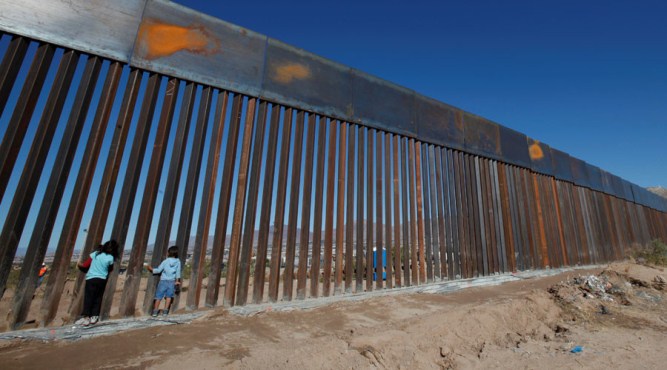
After President Donald Trump signed an executive order to begin construction on a wall along the US-Mexico border, former president of Mexico, Vicente Fox was adamant that Mexico would not compensate the US for this wall.  During an interview on CNN, Fox repeated his previous comments to CNN’s reporter, Anderson Cooper that “Mexico will not pay for that f**king wall, Americans should pay for it.”  Sean Spicer, Trump’s press secretary stated that the Trump team will make Mexico will pay for the wall through massive tariffs on Mexican goods being exported to the US.  Former-President Fox fired back stating that If the US were to put tariffs on Mexican goods, Mexico would respond by putting higher tariffs on American exports to Mexico.  American exports to Mexico total more than 240 billion dollars.  A trade war with the US’ fourth largest trade partner would do immense damage to the economies of both countries.

Many people involved in border security have said that a wall will be a waste of resources and time.  Many agents with US Customs and Border Patrol have stated that a wall will not do much to stop illicit traffic in narcotics or people.  The majority of undocumented migrants enter legally but overstay visas.  Those who do sneak into the border normally work as seasonal laborers in agriculture during planting or harvesting times for crops and then return home to Mexico.  Other agents simply state that a wall would be easy to cross with ladders or tunnels.   A fence already exists for much of the border and has helped in many areas but failed to make any difference in others.  Building a wall along the border would also require the seizure of hundreds of private properties in South Texas due to most of the land being privately owned and used for agriculture.  Much of the mountainous terrain in West Texas, New Mexico, and Arizona make building any sort of infrastructure impossible.  For President Trump to build his planned wall, all of these hurdles must be dealt with.

A Look Back at the Hearings for the Most Controversial Cabinet Appointments

Over the past two weeks,  almost all of the soon-to-be president Trump’s nominees for cabinet positions had confirmation hearings in senate committees.  Most, if not all of the nominees are expected to be confirmed to their positions however some have been very controversial.  Below is a list of the most controversial nominees and any information on their controversies and highlights from their hearings.


Attorney General: Jeff Sessions

jeff_sessions_official_portrait

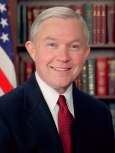
Senator Sessions was accused of racism and was denied a federal judgeship in 1986.  In his hearing, he faced questions about his positions on voting rights, LGBT rights, women’s rights, immigration and criminal justice.  Sessions touted his defense of civil rights laws and voting rights while district attorney for the state of Alabama and his senate vote to extend the voting rights act.  Sessions was adamant that he would enforce all laws equally including those that he did not agree with.  Senator Jeff Sessions is expected to be confirmed.

Secretary of State: Rex Tillerson

download-2

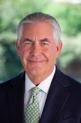
Tillerson is the former CEO of the oil company, Exxon Mobil.  He was accused of holding close ties with the Russian government and faced tough questioning from both Democrats and Republicans.  Tillerson said that standing up to Russian aggression was necessary but also argued that engagement with Russia was necessary.  Tillerson was also asked about human rights in several countries.  He stated that he did not have enough information to determine whether or not the Phillippine president Duterte’s war on drugs was a human rights violation but did state that if some of the allegations against Duterte are proven to be true, Tillerson would consider them a violation of human rights.  Tillerson also stated that he would continue to encourage Saudi Arabia to move towards improving human rights but refused to label the country as a blatant violator of human rights fearing that that would garner unintended repercussions.  Tillerson will likely be confirmed, however, his chances are lower than other nominees because he is opposed by some republican senators, namely Marco Rubio.

Environmental Protection Agency: Scott Pruitt

download-3

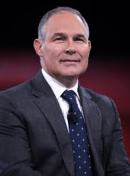
When Scott Pruitt, the former attorney general of Oklahoma was appointed to lead the EPA, many progressives were concerned about his ties to the fossil fuel industry, his denial of climate change, and his lawsuits against the EPA over regulations concerning air and water pollution.  During his hearing, Pruitt faced tough questioning on all of these issues and pledged to follow recommendations from scientists and protect air and water quality.  He will likely be confirmed.

Education Secretary: Betsy DeVos

betsy_devos_2005_crop

A prominent Michigan republican, DeVos is an ardent supporter of school vouchers which siphon government funding away from public schools and into charter schools and private schools.  She also supports teaching Christian religious beliefs in schools.  DeVos faced questions on all of these issues but was unable to give definite answers.  She also refused to condemn guns in all schools stating that rural schools have different needs than urban ones, citing a school in Wyoming which has a fence to protect it from bears.  Although Betsy DeVos is extremely controversial, Democrats will have to fight very hard to block her confirmation.

CIA Director: Mike Pompeo

mike_pompeo_official_portrait_112th_congress

Kansas congressman, Mike Pompeo was questioned about his hardline positions on interrogation techniques and surveillance.  Although Pompeo previously has supported torture techniques being used to interrogate detainees, he stated that he will not support them as CIA director due to laws passed prohibiting torture of people in US custody.  On surveillance, Pompeo stated that he would follow the USA Freedom Act which prohibits some bulk collection of phone and internet data.  Mike Pompeo is expected to be confirmed.

Treasury Secretary: Steven Mnuchin

steven_mnuchin

Mnuchin bought the bank, IndyMac during the 2008 financial crisis and renamed it One West Bank.  One West foreclosed on thousands of homeowners during the housing crisis.  Mnuchin was also accused of investing his money overseas to avoid taxes.  At his hearing, Mnuchin stated that OneWest’s foreclosing on so many homes was a mistake but denied the allegations that he avoided taxes.  Mnuchin will face harsh opposition from Democrats but will likely be confirmed.

Secretary of Health and Human Services: Tom Price

download-4

Congressman Price’s main agenda for the past 6 years has been to try to repeal the affordable care act.  Price also supports cutting Medicare and Medicaid.  Price is also accused of failing to pay taxes several times.  Democrats questioned him harshly on these issues.  Price denied the allegations of tax avoidance and dodged questions about his positions on Medicaid and Medicare instead, stating that soon to be president, Trump will not go back on his previous commitments to preserve these programs.  Price will face intense opposition from democrats but likely will get confirmed.

These are the most controversial of Trump’s appointments to have gone through hearings.  Other nominees will almost certainly be confirmed by the senate and are perceived to be quite moderate.


Photos from wikimedia commons.


Why Rep. John Lewis is so Revered and what was his Recent Controversy


download-1

Rep. John Lewis (Wikimedia Commons)

Recently, Congressman John Lewis (D, Georgia-5) has been in the news several times.  Firstly, Congressman Lewis gave a speech which harshly criticized Senator Jeff Sessions’ appointment as attorney general when he and Senator Cory Booker (D-NJ) testified at Senator Sessions’ confirmation hearing.  After that, Mr. Lewis stated that he will not attend President-Elect Trump’s inauguration as president.  Lewis stated that he believed that Trump’s victory was illegitimate due to Russian interference.  Trump later lashed out at Congressman Lewis via twitter, saying that Lewis should focus on his district in Georgia which Trump said was “crime filled” and called John Lewis, “All talk…no action.”  Mr. Trump’s comments drew criticism from many people due to their divisiveness and due to the fact that he attacked a civil rights leader on Martin Luther King weekend.

John Lewis grew up in an impoverished family in the segregated deep southern state of Alabama.  His parents were sharecroppers, people who worked for farmers in return for a very small portion of their crop.  Lewis attended university in Nashville, Tennesee and later moved to Montgomery, Alabama where he participated in the bus boycott and worked closely with Rosa Parks.  As he joined more protests across the south, John Lewis became a prominent leader in the fight for civil rights.  Lewis became a close aide to Dr. Martin Luther King Jr. and helped lead the march on Selma, Alabama for voting rights and the famous March on Washington where Dr. King gave his famous “I have a dream” speech.  Congressman John Lewis now leads the Congressional Black Caucus and devotes much of his time to issues that affect people of color.  Lewis is still a revered figure among the Black community and among modern civil rights activists.


President-Elect Trump Finally Acknowledges that Russia Hacked the US Election

President-Elect Trump released a statement stating that he did, in fact, believe that Russia meddled in the American election process.  Reince Priebus, one of Trump’s closest aides and nominee for White House Chief of Staff, told Fox News that ” [Trump] accepts the fact that this particular case was entities in Russia, so that’s not the issue.”

In December of 2016, the CIA released a report confirming suspicions that Russia was actively trying to support Trump in the election by hacking organizations connected to the Clinton campaign.  In response, some electors called for a briefing on Russian interference in the election before the electoral college voted.

The alleged involvement of Russia in the US election involves hacking Democratic party data and releasing degrading information about Hillary Clinton through wiki-leaks.  Russia also allegedly planted fake news which hurt Clinton’s public image.  There are also reports of Russia planting trolls on the internet to attempt to influence people to vote for Trump.

Until recently, President-elect Trump denied any involvement from Russia in the election.  He dismissed these charges as an attempt to de-legitimize his election victory.  Trump has been criticized for his praising of Russia and Russian president, Vladimir Putin.  Meanwhile, intelligence officials repeatedly stated that the allegations of Russian involvement were backed by sufficient evidence.  President Obama imposed new sanctions on Russia and stated that counter cyber attacks were possible.  Several senators from both parties have come out in support of tougher action against Russian cyber-attacks.

During the confirmation hearings of Gen. John Kelly for Homeland Security, Mike Pompeo for CIA director, Rex Tillerson for Secretary of State and James Mattis for Defense secretary, the issue of cyber security and Russian cyber attacks were discussed in great detail.  All the cabinet appointees have pledged to step up efforts to defend the US against future cyber warfare.


The Flaws of “America First”

By Hari S. (guest contributor)

When a president is elected and our nation’s greatest adversaries celebrate, you know there is a problem. When a president is elected and Americans are grieving, you know there is a problem. When a president is elected and women feel demeaned and not empowered, you know there is a problem. When that president is Donald Trump, the problem becomes even clearer.

Trump, however, has done a masterful job of covering up his many flaws, compensating for his dubious tax methods by appealing to the wealthy and promising them lower taxes, but also brought into play the white, working-class, Rust-Belt element of America by promising to bring back their jobs and scrap globalization for an “America First” strategy.

“America First” may sound appealing, but it has some key flaws- take the Iran nuclear negotiation, for instance. With a country as hostile as Iran, can we afford to put America first and make relations frostier than they already are? If we choose to do this, our deepest priorities- preventing nuclear proliferation, advancing human rights, and creating unity in the region, will pay the price.

His appeals to various classes are equally problematic- by lowering taxes “big-league” (35%), how can a potential Trump administration take care of all the services and improvements they have promised to the urban poor, who are, in his words, “living in hell”?  By bringing jobs back to America, labor costs will increase, forcing companies to cut workers and leading to the same undesirable employment situation from where we started.

Moreover, the implications of Trump’s presidency on our reputation across the world are the most detrimental. America was founded on the premise that “all men are created equal” and that anyone has a chance to succeed. Why, then, do we not apply that to the rest of the world by welcoming Muslim and Latino immigrants? Why wouldn’t we give developing economies a chance to grow instead to support the greater good instead of America first, because we only truly succeed when the world does.

Knowing all that we do about what America stands for and how much was at stake on November 8th, it should be truly disappointing to all Americans, regardless of race, economic status, or religion that the people of this country were disillusioned into electing a man who promises much, but has proved himself to achieve little.

The Worsening Situation in South Sudan

South Sudan is the newest country in the world.  It broke away from the nation of Sudan in 2011 after years of civil war.  South Sudan is home to over 60 different ethnic groups and the majority of these groups either follow traditional religions or Christianity and speak local tribal languages.  This is in contrast to the north of Sudan where the majority of people speak Arabic and are Muslim.

When Sudan gained its independence from joint rule by the UK and Egypt, a group of military elites from the north took power.  The south’s natural resources were exploited with little benefit to the impoverished people living there and almost all gain from the mining of resources such as gold and the production of oil went to the powerful and well-connected elites from the north.  Meanwhile,  many of the regions in the south of Sudan suffered from immense poverty and famine.  In 1983, civil war broke out with many tribes from the south uniting against the government in the north of Sudan.  The Sudanese government is accused of attempting to engage in genocide and ethnic cleansing of regions in the south of Sudan and government-backed militias have attacked several non-Arab villages and tribes such as the Dinka and Nuer, the two largest groups in modern South Sudan.

In 2005, after years of war and famine, a ceasefire was finally reached between the government of Sudan and rebels from the south.  They agreed that southern regions of Sudan would be able to autonomously govern themselves.  The agreement also stated that the autonomous regions of southern Sudan could hold a referendum for independence at any time.

In 2011, a referendum on independence was held and almost 99% of voters voted for independence.  South Sudan became an independent nation but problems occurred almost immediately.  The many ethnic groups and tribes in South Sudan were all united while fighting against the Sudanese government to the north, however, tension between different factions began almost immediately after independence.  In order to try to limit these conflicts between tribes, a government was established with the president, Salva Kiir belonging to the largest ethnic group, the Dinka and the vice president, Riek Machar being from the second largest group, the Nuer.

In 2013, vice president Machar attempted to stage a coup d’etat to overthrow president Kiir.  Immediately afterward, Kiir expelled many members of the government who were part of Machar’s party.    South Sudan’s government under president Kiir alleges that Nuer soldiers loyal to vice-president Machar raided businesses owned by Dinka people in the capital city, Juba.   Most of the people who were dismissed from the government were from the Nuer tribe.  President Kiir filled most of the vacant positions with members of his own Dinka tribe.  Soon, former vice-president Machar fled South Sudan and called for president Kiir to resign.

Soon after this, majority Nuer militias clashed with the majority Dinka militia and the South Sudanese army.  Both government troops and rebels loyal to Riek Machar have been accused of attacking civilian villages where they have killed and raped people and looted property including cattle.  Ceasefire negotiations between different factions are ongoing but several agreements have broken down.  The United Nations has send peacekeeping forces to maintain order in the capital and to protect the refugee camps which are hosting massive numbers of people displaced by the fighting.  Amid the chaos, the already dirt-poor nation of South Sudan is once again facing famine due to and is extremely vulnerable to drought conditions making food shortages worse.  Almost all schools in South Sudan have shut down and the majority of people do not have access to medical attention.  This has exacerbated the already worsening disease epidemics such as malaria and cholera.

Today, the government of South Sudan reached out to rebel groups in an effort to re-convene peace talks amid increasing violence.


The Controversy Over the Israeli Settlements Resolution in the United Nations

This week, the US refused to use its veto power in the UN Security Council to block a resolution that condemned the construction of Israeli settlements in occupied Palestinian territory.  Under President Obama, the US has held a policy against Israeli settlements in the West Bank, however, the US had vetoed every resolution relating to the Israeli-Palestinian conflict in the UN Security Council until now.  The settlements Israel has built inside Palestinian territory are considered illegal by most of the international community.  Most countries are also vehemently opposed to the Israeli militaries actions in Palestinian territory which they allege amounts to a violation of the Palestinian people’s rights and a military occupation.  Most countries do recognize Israel but also recognize a Palestinian state.

Most nations maintain that the best solution to the Israeli-Palestinian dispute is a two-state solution, one where an Israeli state exists side by side with an independent Palestinian state.  Many say that Israeli settlement communities in occupied territory make the establishment of an autonomous Palestinian state impossible, thus hindering the peace process.  Supporters of Israeli settlements and military activity in the Palestinian territories claim that the land belongs to Israel and that the military presence in the Palestinian territories of the West Bank and Gaza are essential to Israeli security nad that settlements are built on land legally obtained from Palestinians, something most Palestinians deny.

After the UN vote passed the resolution banning Israeli settlements in the West Bank,  Israeli Prime Minister Benjamin Netanyahu called the resolution “shameful”.  He stated that he was ready to begin working with President-Elect Trump and was done working with President Obama.  Netanyahu also stated that Israel would not abide by the terms of the UN resolution.  Trump stated that the vote was “anti-Israel” and “an impediment to peace”.   Some US senators went even further in condemning the resolution.  Senator Lyndsey Graham stated that the US should pull out of the UN.

While Israeli leaders and conservative American policymakers stated disapproval for the UN resolution, Palestinian leaders had a very different reaction.  Palestinian Authority president, Mahmoud Abbas stated that this resolution “laid the groundwork” for the upcoming peace talks in Paris, a last ditch effort by President Obama and several European leaders to progress towards a peaceful solution to the Israeli-Palestinian Conflict.

With the incoming administration in the US, the future of American involvement in the Israeli-Palestinian Peace process is in question.  Will our stance stay similar to as it is now?  Or will the US’s involvement change?