…but at what cost?
October 6, 2017, Rohin Ghosh
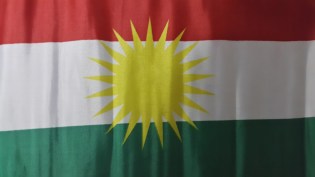
The flag of Iraqi Kurdistan and Kurdish movements all over the Middle East. (photo credit: Wikimedia Commons)
The Kurds are the worlds largest ethnic group without their own country. Northern Iraq, Northwestern Iran, Southeastern Turkey, and Northeastern Syria are home to large Kurdish populations. The Kurds have their own language and cultural traditions which are similar, yet distinctly different from their Arab, Persian, and Turkish neighbors. While most Kurds are Sunni Muslims, religion plays less of a role in Kurdish culture than in Arab or Iranian culture. A sizeable minority of Kurds are members of other religious communities such as the Yazidi religion. Kurds have faced centuries of being oppressed by their larger neighbors. At the end of the First World War, the Kurdish homeland, known to Kurds as Kurdistan was broken up between the countries of Turkey, Iraq, Iran, and Syria. More recently, the Kurdish people have faced genocide in Saddam Hussein’s Iraq and continuous political and cultural repression in Turkey. Through all of this adversity, many Kurds still have a very strong sense of Kurdish nationalism and a dream that one day, all of Kurdistan, the Kurds’ historic homeland will be reunited.
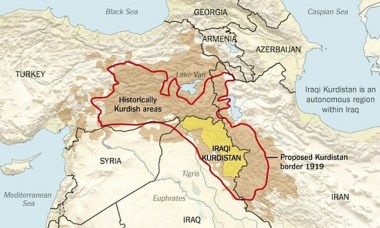
The Kurdish homeland and Iraqi Kurdistan. (photo credit: frontnews.eu)
In Turkey, Kurds have a political party which advocates for autonomy for the Kurdish majority region of southeastern Turkey. Since the breakout of the Syrian Civil War, an alliance of Kurdish and Arab tribes in northeastern Syria has carved out a semi-autonomous region. There are also several Kurdish insurgent groups and militias, including the PKK in Turkey. The Kurdish insurgent groups often clash with the governments of Iran and Turkey. Most of the armed Kurdish groups are considered terrorist organizations by the countries they seek independence from.
In Iraq, the Kurds have had an autonomous region in the north of the country. Iraqi Kurdistan, the Kurdish autonomous region, has its own government which acts with little interference from the Iraqi government in Baghdad and its own military called the Peshmerga. In collaboration with Iraqi army and tribal forces, Kurdish Peshmerga forces in Iraq have dealt lasting blows to ISIS operations, retaking important cities such and Sinjar and Kirkuk as well as taking back oilfields, thus cutting ISIS’ funding. Much of the time, Kurdish forces have directly worked with the Iraqi Army. However, with each victory, the Kurdish people of Iraq and all over the Middle East have been inching closer to independence, a goal Kurdish leaders have been dedicated to achieving. The government of Iraqi Kurdistan is known as the Kurdistan Regional Government or KRG. It is based in the city of Erbil and was lead by Massoud Barzani, the former President of Iraqi Kurdistan. While the KRG controls most government affairs in Iraqi Kurdistan, the Erbil government does have to split oil revenues with the government in Baghdad and does not have full control over airports and border crossings.
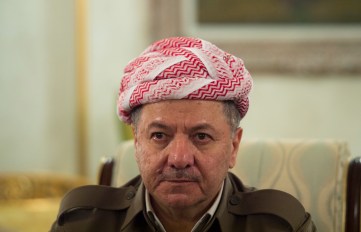
Former Kurdish Regional Government President Massoud Barzani. (photo credit: Wikimedia Commons)
Kurdish Regional Government President Barzani announced in June of 2017 that there would be a referendum to decide whether or not Iraqi Kurdistan would declare independence from the Iraqi government in Baghdad. The referendum was originally supposed to be held earlier but was postponed until the major city of Mosul was taken back from ISIS by Iraqi and Kurdish forces. Calls for an independent Kurdish state in Northern Iraq have been growing since over a century ago when the Middle East was divided by European powers with little regard for ethnic and sectarian differences. The vote to decide the future of Iraqi Kurdistan finally took place on September 25.
In the run-up to the referendum, leaders in countries struggling with their own Kurdish separatist movements such as Turkish President Recep Tayyip Erdogan and Iranian President Hassan Rouhani condemned the attempt at independence by the KRG. Iraqi Prime Minister Haider al Abadi repeatedly denounced the referendum as illegal and dangerous to regional stability and security. Days before the referendum, the Iraqi Supreme Court ruled the vote unconstitutional. The move toward independence by the Iraqi Kurds was discouraged by the US and most European countries on the grounds that the entire region could fall apart. One country, however, did declare support for Kurdish independence. Israel, a country seen as an enemy by most regional powers has long supported a Kurdish state.
When the vote finally took place, 93 percent of voters cast their ballots in favor of independence. Voter turnout was fairly high but lower than expected at 72 percent.
Soon after the referendum, Turkey threatened to shut off the flow of oil from Iraqi Kurdistan to the Turkish ports, thereby shutting off the main source of revenue for Iraqi Kurdistan. Iran and Turkey have already placed economic sanctions on Iraqi Kurdistan. The Iraqi Government in Baghdad has closed airports in the Kurdish cities of Erbil and Sulaymaniyah and is restricting travel to Iraqi Kurdistan. Iraq, Iran, and Turkey conducted joint military exercises near the borders of Iraqi Kurdistan.
Iraqi Prime Minister Haider al Abadi has so far refused to negotiate directly with KRG leaders until the results of the referendum are declared null and void. According to Rudaw, a pro-independence news agency based in Erbil, Iraqi Kurdistan, former KRG President, Massoud Barzani had stated that he was willing to negotiate with the Iraqi government in Baghdad and that the results of the referendum were not binding. While the war of words between Baghdad and Erbil has escalated, Iraqi troops have retaken Hawija, a city adjacent to land disputed between Iraqi Kurdistan and the Baghdad government. Several Iraqi and Kurdish politicians have attempted to start negotiations over the situation in Iraqi Kurdistan, however, so far, none have succeeded in resolving outstanding conflicts. Iraqi Prime Minister, Haider Al Abadi has also refused to negotiate Several western countries including the US and France have offered to mediate between the KRG and the Iraqi government.
In October, Iraqi forces captured the disputed city of Kirkuk from Kurdish forces. Armed clashes between Kurdish Peshmerga troops and the Iraqi army continued until a ceasefire restored some semblance of order. Kirkuk is currently controlled by the Iraqi government and is a contentious topic during negotiations due to its vast oil reserves.
Massoud Barzani has resigned from his role as President of Iraqi Kurdistan, citing his age and desire to pass leadership on to a new generation. His successors have taken a more conciliatory approach to negotiations with the Iraqi government, even stating a willingness to void the referendum results and return Iraqi Kurdistan to a similar status as it had before the move for independence. In spite of this, however, progress in negotiations with the Iraqi government has been slow. Both Iraqi Kurdistan and the rest of Iraq will hold elections soon. Iraqi Kurdistan will be voting for a new president and for members of Parliament in November. Steering Iraqi Kurdistan toward independence without violence or unrest will guarantee former President Barzani’s party victory even though Barzani’s term limit ran out this November. The KRG is currently being led by his son. Meanwhile, Iraqi Prime Minister Abadi is trying to navigate the complicated world of Iraqi sectarian politics. He cannot afford to alienate the Kurds or Iraqi Sunni Arabs, many of whom support Kurdish independence, as this may risk further Iraqi civil war and unrest for years to come. On the other hand, Abadi, himself a Shia like the slim majority of Iraqis will lose his 2018 election if he alienates hard-line Iraqi Shia Arabs such as the cleric Muqtada al Sadr. Many of these hardliner Shias are supported by Iran and most oppose Kurdish independence. Abadi cannot afford to appear too soft on the Kurdish move toward independence, however, he can’t afford stirring up ethnic and religious tensions in Iraq.
There are clear arguments to be made for the creation of an independent Kurdish nation. The Kurds have never been truly represented by their Turkish, Iraqi, or Iranian governments. In fact, quite the opposite has happened on several occasions. The Kurdish people need to control their own destiny and their homeland being divided up into five parts is a recipe for only more strife and unrest. On the other hand, a unilateral move towards independence may result in an already war-torn and volatile region descending into even more war which may last decades. So far, the leaders of Iraqi Kurdistan and Iraq have avoided violence, the question is can they bring themselves to sit down, negotiate, and find a solution before it’s too late?
 Youth News Journal